Mudassir Ali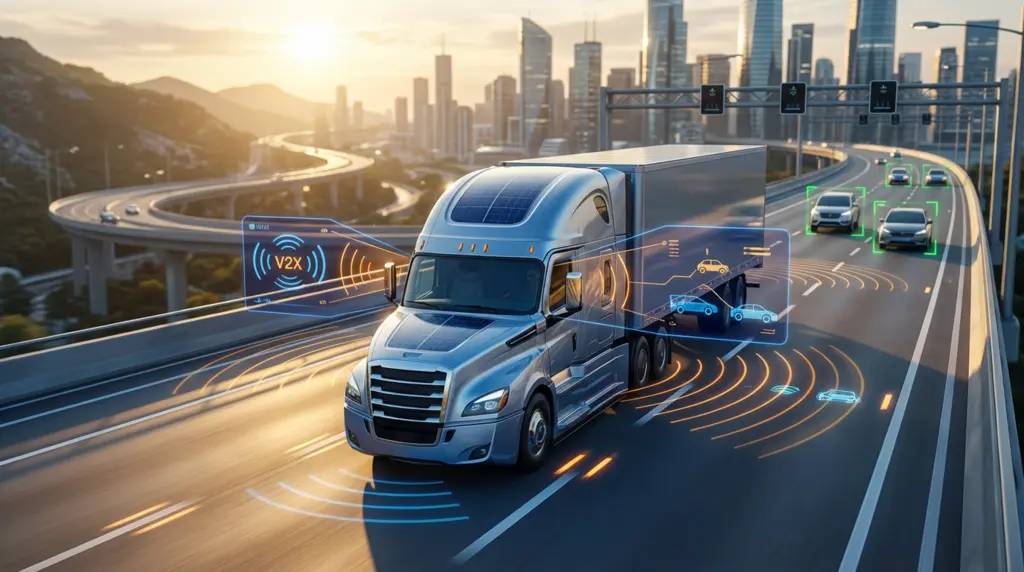
Trucking has experienced rapid evolution in safety standards, driven by advanced technology that continually redefines what it primarily means to be safe on the road. Modern innovations not only protect truck drivers but also ensure overall road safety for every motorist. As these breakthroughs become more accessible, it is increasingly important to understand their impacts and advantages. If you are seeking insight on improving safety or understanding the legal implications after an accident, consulting a dedicated team can be invaluable. Learn more from this trusted resource: https://www.855dolor55.com/truck-accident-lawyer-2/.
Technologies such as adaptive cruise control, artificial intelligence in dashcams, and connected communications are paving the way for fewer accidents and more secure transport. These tools not only benefit trucking companies and drivers but also have far-reaching implications for community safety and highway efficiency across the country. The industry is witnessing a shift toward smarter vehicles and infrastructure, driven by both regulatory changes and industry innovation.
AI-Powered Dashcams: The New Eyes on the Road
Artificial intelligence has found its place at the heart of modern truck safety systems, especially through AI-powered dashcams. These innovative cameras provide continuous, real-time monitoring of a truck’s interior and exterior environments, analyzing driver behavior and road conditions, and sending instant feedback or warnings. This proactive approach is already making an impact. For example, Hawaiian authorities have distributed a thousand dashcams equipped with AI to automate inspections of infrastructure such as guardrails and highway signage, streamlining the detection and resolution of road hazards. This technology means risks can be identified and mitigated much faster than with traditional methods, leading to improved road safety for all, according to the Associated Press.
Adaptive Cruise Control: Maintaining Safe Distances
Adaptive Cruise Control (ACC) has become a cornerstone of truck driver assistance, serving as an advanced safety net that automatically adjusts the truck’s speed to maintain a safe following distance from other vehicles. Using sensors like radar and forward-facing cameras, ACC helps to dramatically reduce crash risk, driver fatigue, and the impact of unexpected slowdowns. By removing the need to manage speeds in heavy or fluctuating traffic manually, drivers can focus on their surroundings, reducing human error and improving reaction times on the road. For more details, refer to this NHTSA resource.
Vehicle-to-Everything (V2X) Communication: A Connected Future
The rise of V2X technology has created a new era for connected vehicles. V2X allows trucks to communicate with nearby vehicles, traffic infrastructure, and even pedestrians. This technology provides situational data, such as traffic signals changing or another vehicle suddenly braking, that helps drivers make safer, faster decisions. Dedicated Short-Range Communications (DSRC), a key part of V2X, delivers instant hazard warnings, enabling both the truck and other vehicles to avoid accidents more effectively. These developments are a vital building block for the future of autonomous and semi-autonomous trucking fleets. Additional background is provided by The New York Times.
Lane Centering: Staying on the Right Path
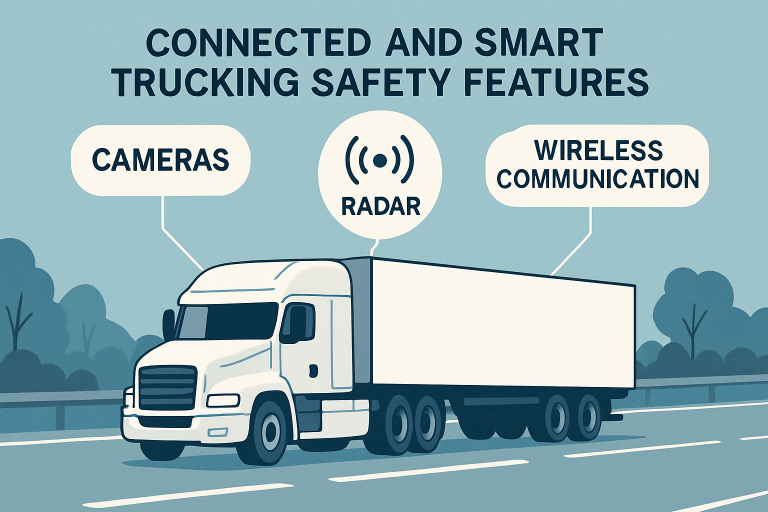
Lane centering systems have emerged as an essential driver aid, ensuring trucks remain precisely within their designated lanes. This capability is crucial during long-haul journeys, where fatigue and inattention can cause unintentional lane departures. Lane centering uses a combination of cameras and sensor systems to monitor lane position and, if necessary, apply subtle steering corrections to keep the vehicle on course. Beyond offering peace of mind, this system serves as a safety net, particularly in less-than-ideal weather or low-visibility conditions.
Video Telematics: A Comprehensive View
The integration of telematics and video technology creates a comprehensive, multi-layered system for overseeing truck operations. Unlike basic GPS tracking, video telematics captures visual context alongside performance data, offering more profound insight into driver behavior, traffic conditions, and real-time incidents. Fleet managers can review footage to understand better harsh braking, sudden lane changes, speeding, and distracted driving. This detailed visibility allows companies to deliver targeted coaching, improve route planning, and respond quickly to potential safety concerns. In addition, recorded evidence helps protect businesses from false claims and costly disputes. By leveraging these advanced analytics, organizations can enhance operational efficiency, lower risks, and strengthen a culture centered on accountability and road safety.
AI in Road Maintenance: Proactive Hazard Detection
Artificial intelligence is reshaping how governments manage and maintain critical transportation infrastructure. Instead of relying solely on manual inspections or waiting for citizen complaints, cities and states now deploy AI-powered systems that continuously monitor road conditions in real time. Advanced cameras and sensors can identify potholes, surface cracks, faded lane markings, and damaged traffic signs with impressive accuracy. Hawaii’s implementation of AI dashcams highlights how quickly hazards can be detected and reported, but many other municipalities are adopting similar technologies. By shifting to proactive identification and rapid response, agencies can schedule timely repairs, lower long-term maintenance costs, extend the lifespan of roadways, and significantly reduce accidents linked to deteriorating road conditions.
Conclusion
The integration of artificial intelligence, advanced sensor technologies, and real-time communication systems is reshaping the trucking industry at an unprecedented pace. AI-powered analytics can predict maintenance needs, optimize routes, and detect potential hazards before they escalate into serious incidents. Enhanced sensor systems improve driver awareness by monitoring blind spots, lane positioning, and surrounding traffic conditions. Meanwhile, real-time communication tools allow fleets to coordinate efficiently, respond quickly to emergencies, and maintain consistent oversight of vehicle performance. These combined innovations not only enhance operational efficiency but also significantly improve road safety. As technology continues to evolve, trucking companies, drivers, and the public will experience even greater protection, reliability, and long-term benefits.