Mudassir Ali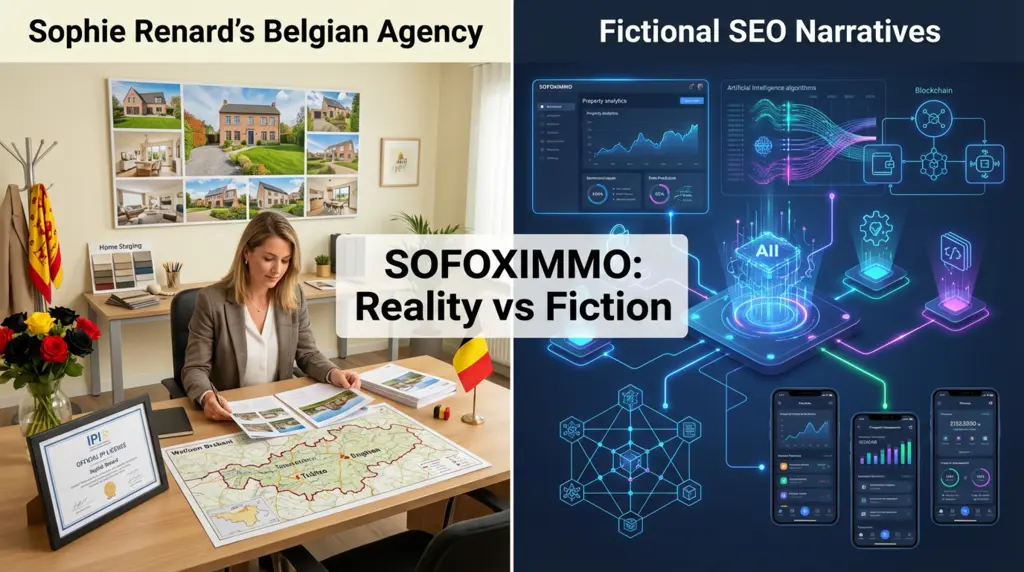
You typed “sofoximmo” into Google expecting clear answers about a real estate platform or investment tool. Instead, you found conflicting information—some sites claim it’s revolutionary property technology, others describe Sophie Renard’s Belgian agency, and a few treat it like a philosophical concept.
Here’s what’s actually happening: Sofoximmo is a legitimate Belgian real estate agency operated by Sophie Renard in the Walloon Brabant region. That’s the verifiable reality. Everything else claiming sofoximmo is an AI-powered investment platform, property management software, or digital ecosystem is SEO content built around an existing business name without representing that actual business.
Understanding the difference between what sofoximmo actually is versus what marketing content claims it represents helps you navigate similar situations across the internet—and might even teach you something about modern digital real estate services.
The Real Sofoximmo: Sophie Renard’s Belgian Agency
Sofoximmo is a full-service real estate agency that is traditional in its way of operation and based in Belgium, where it primarily covers the areas of Tubize, Enghien, Rebecq, and Braine-le-Comte. The agency, which is owned and operated by licensed agent Sophie Renard (IPI registration 509.788), emphasizes the provision of personalized property services.
The business model, in reality, is not complicated: it is about assisting sellers in letting their properties get through the buyer’s eye by means of professional staging, HDR photography, 2D/3D floor plans, and targeted buyer outreach. On the other hand, Sofoximmo offers buyers a chance to access curated listings in the Walloon Brabant region with hands-on support throughout the buying process.
Unlike the tech platform narratives you’ll find online, the real sofoximmo doesn’t offer:
- Automated property management software
- AI-powered investment analytics
- Blockchain-secured transactions
- Mobile apps for portfolio tracking
- Automated rent collection systems
What it does offer is traditional, human-centered real estate service enhanced by modern marketing techniques. Sophie Renard emphasizes home staging—presenting properties at their best advantage through strategic furniture arrangement, decluttering, and visual enhancement. Professional photography using HDR (High Dynamic Range) techniques captures properties in optimal lighting conditions, making listings stand out online.
The agency also creates detailed 2D and 3D floor plans, giving potential buyers clear spatial understanding before physical viewings. This combination of traditional expertise and contemporary presentation tools represents the actual sofoximmo approach.
Why SEO Content Created a Fictional Platform
Here’s where things get interesting from a digital marketing perspective. Multiple websites have published detailed articles describing sofoximmo as various types of technology platforms—investment tools, property management software, real estate intelligence systems—none of which accurately represent Sophie Renard’s agency.
This happens because “sofoximmo” is a unique, low-competition keyword. Content creators recognized that few established articles existed about this term, making it attractive for SEO purposes. They built speculative content around the name, describing theoretical platforms that align with popular real estate technology trends.
The pattern follows a familiar template: identify an unused or underutilized keyword (in this case, an actual business name with minimal online presence), create comprehensive content describing what such a platform “could” be, optimize for search engines, and capture traffic from people searching that term.
Some articles even acknowledge this approach subtly, using phrases like “imagine a platform called sofoximmo” or describing it as “emerging” or “innovative”—language that sounds definitive but technically avoids claiming the platform currently exists as described.
This creates genuine confusion. Someone researching sofoximmo before contacting Sophie Renard’s agency might expect AI-powered analytics and automated systems based on search results, only to discover a traditional (albeit professionally run) real estate service.
What Modern Real Estate Technology Actually Offers
The fictional sofoximmo platforms described in SEO content do reflect real trends in property technology, just not under that specific brand. Understanding what actually exists helps separate reality from marketing fiction.
Property management software like Buildium, AppFolio, and Rent Manager genuinely automate rent collection, maintenance tracking, and tenant communication. These platforms reduce administrative work for landlords managing multiple properties by centralizing operations, automating reminders, and generating financial reports.
Property managers using comprehensive software report saving 10-15 hours weekly on tasks that previously required manual tracking, phone calls, and spreadsheet management. That time savings is real and measurable.
Real estate investment platforms such as Fundrise, RealtyMogul, and CrowdStreet do provide data analytics, market comparisons, and investment opportunities for buyers seeking passive real estate exposure without direct property ownership. These platforms democratize access to real estate investments that previously required significant capital or industry connections.
AI-powered property search exists through services like Redfin and Zillow’s advanced filters, which use machine learning to surface properties matching specific criteria beyond basic price/location searches. These tools consider factors like school quality, commute times, crime statistics, and market appreciation potential.
Virtual tour technology has become standard, with services like Matterport creating immersive 3D walkthroughs that let buyers explore properties remotely. This technology saw massive adoption during COVID-19 and remains popular for initial property screening.
Blockchain in real estate exists in experimental forms, primarily for title management and transaction recording, though widespread adoption remains limited due to regulatory complexity and industry inertia.
These technologies are real, developed, and available—just not under the sofoximmo brand. The fictional platform descriptions borrow from these existing innovations and repackage them under an available keyword.
How to Evaluate Real Estate Services vs Marketing Hype
The sofoximmo situation provides a useful framework for evaluating any real estate service, whether traditional agencies or technology platforms.
Verify actual existence beyond articles. If you can’t find a functioning website with actual sign-up processes, downloadable apps in official stores, verifiable customer reviews on independent platforms, or company registration information, be skeptical of claims. Sophie Renard’s sofoximmo has a real website (sofoximmo.be) with actual property listings, contact information, and a physical business presence. That’s verification.
Check for specific details over general promises. Real services provide pricing structures, terms of service, specific feature lists, and clear explanations of how they work. Vague descriptions like “revolutionizing real estate” or “AI-powered insights” without explaining the actual AI technology being used often signal marketing copy over substance.
Look for verifiable results. Claims about “30% time savings” or “45 days faster sales” mean nothing without methodology explanation. How were these figures calculated? Over what period? Compared to what baseline? Legitimate services either provide detailed case studies or avoid making unverifiable percentage claims.
Assess consistency across sources. When multiple articles about the same service contradict each other—some describing it as investment software, others as property management tools, still others as a search platform—that inconsistency reveals speculation rather than reporting on a real, defined service.
Understand the business model. How does the service make money? Subscription fees? Commission on transactions? Data licensing? If you can’t identify the revenue model, you likely don’t understand what you’re evaluating. Sophie Renard’s sofoximmo clearly makes money through traditional real estate commissions—straightforward and transparent.
The Belgian Real Estate Context That Matters
For anyone actually interested in Sophie Renard’s sofoximmo—the real business, not the fictional platforms—understanding Belgian real estate practices helps set appropriate expectations.
Belgian real estate transactions involve notaries (notaires) who handle legal aspects, title transfers, and official documentation. This differs from some countries where lawyers or agents manage these processes. The notary system adds a layer of legal oversight and consumer protection but also lengthens transaction timelines compared to markets like the United States.
In Belgium, property agents mainly take on the role of representing the seller, while the buyers often do the searching themselves or involve a buyer agent for bigger deals. The commission rates differ from case to case but usually range from 2-4% of the selling price; sometimes they are negotiable depending on the property value and market conditions.
The region of Walloon Brabant where sofoximmo is active comprises both urban zones in close proximity to Brussels and more isolated communities. The spectrum of property in this area includes contemporary apartments in places like Tubize and farmhouses that have undergone refurbishment with country-style settings. It is essential to know about the local market situation—Brussels commute access, good school districts, and infrastructure development—rather than to just rely on the general Belgian real estate trends.
Sophie Renard’s focus on home staging and professional photography gives the agency a competitive advantage in markets where many similar houses are for sale. The quality of the visual presentation rather plays a dominant role in determining the initial buyer interest, more so for the properties that are online listed since the first impression is formed just in a few seconds of viewing the listing photos.
What Sofoximmo Actually Teaches About Digital Marketing
Beyond clarifying what sofoximmo is (and isn’t), this situation illustrates broader patterns in how content marketing creates digital realities that may not reflect physical ones.
Keyword availability drives content creation. When a unique term exists—especially one connected to a real but small business with limited online presence—content creators see opportunity. They build comprehensive articles around that term, capturing search traffic regardless of whether they’re describing something real.
Speculation can look authoritative. Well-written, properly formatted articles with headers, bullet points, and professional tone read as legitimate even when describing fictional services. The presentation format signals credibility independent of content accuracy.
Aggregated “trends” create compound misinformation. When multiple sites publish similar speculative content, each reinforcing the others, it creates an illusion of consensus. Later articles cite earlier ones, building a reference network that appears substantial despite originating from speculation rather than reporting.
Local businesses get overshadowed. Sophie Renard’s legitimate sofoximmo agency competes against dozens of articles claiming her business name represents various technology platforms. Someone searching “sofoximmo” might never find her actual agency website beneath layers of SEO content about fictional platforms.
This dynamic isn’t unique to sofoximmo—it happens across industries whenever small businesses have memorable names that content marketers can repurpose for broader keyword strategies.
Finding Real Real Estate Help
Whether you need services like Sophie Renard’s Belgian agency or the property technology described in fictional sofoximmo articles, here’s how to find legitimate help.
For traditional real estate services: Start local with licensed agents who have verifiable track records. In Belgium, check IPI registration numbers. In the US, verify licensing through state real estate commissions. Look for agents with specific neighborhood expertise rather than generic market knowledge. Review their actual sold listings, not just marketing promises.
For property management software: Research established platforms with thousands of verified users. Buildium, AppFolio, and TenantCloud offer free trials. Test the actual software before committing to annual contracts. Read implementation reviews—learning curves matter more than feature lists.
For real estate investment platforms: Only use SEC-registered platforms if you’re in the United States. Verify regulatory compliance through official government databases. Start with small investments to understand platform mechanics before committing significant capital. Diversify across multiple platforms rather than concentrating risk.
For market research tools: CoreLogic, Zillow Research, and local MLS data provide actual market statistics. Paid services like ATTOM Data Solutions offer comprehensive property information for investors. Free tools work for casual research; professionals need paid subscriptions for detailed analytics.
For virtual tour creation: Mattermost leads the 3D space; iGuide and 3D Vista offer alternatives. These services require initial investment in camera equipment and time to learn software, but they dramatically improve online listing engagement.
Moving Beyond the Confusion
The existence of Sofoximmo as a dual entity—both as a legitimate Belgian agency owned by Sophie Renard and as a fictional tech platform in marketing content—exemplifies a situation where digital marketing has made even the existing businesses’ affairs a bit unclear.
The takeaway is not that online information is untrustworthy (though a dose of healthy skepticism is always good). It is that verification has become the most critical factor in this case. In the long run, it is not only the comprehensive, attractive, and professional-looking articles that count but also their existence. So, check for real services, legitimate businesses, and uniform information across different sources.
Sophie Renard’s real agency, on the other hand, is a lot less complicated than the fiction: it is a trustworthy real estate service that assists the clientele in Walloon Brabant with buying and selling properties through expert staging, quality marketing, and personalized attention. No AI, no blockchain, no app—just human expertise applied to the local real estate needs.
The capabilities of the property technology described in the fictional articles of sofoximmo can be seen in real platforms that belong to different brands. For instance, if you are looking for automated property management, investment analytics, or advanced search tools, they are simply available but not under the sofoximmo name.
Knowing what is real and what is just marketing gives you the power to choose wisely when you are buying property in Belgium, looking for investment tools, or just trying to understand what a search result really means. That clarity is of greater importance than the description of any fictional platform.



 Rizwan Ali