Health
Struggling with Hair Loss? Here’s How Exosome Therapy Actually Works

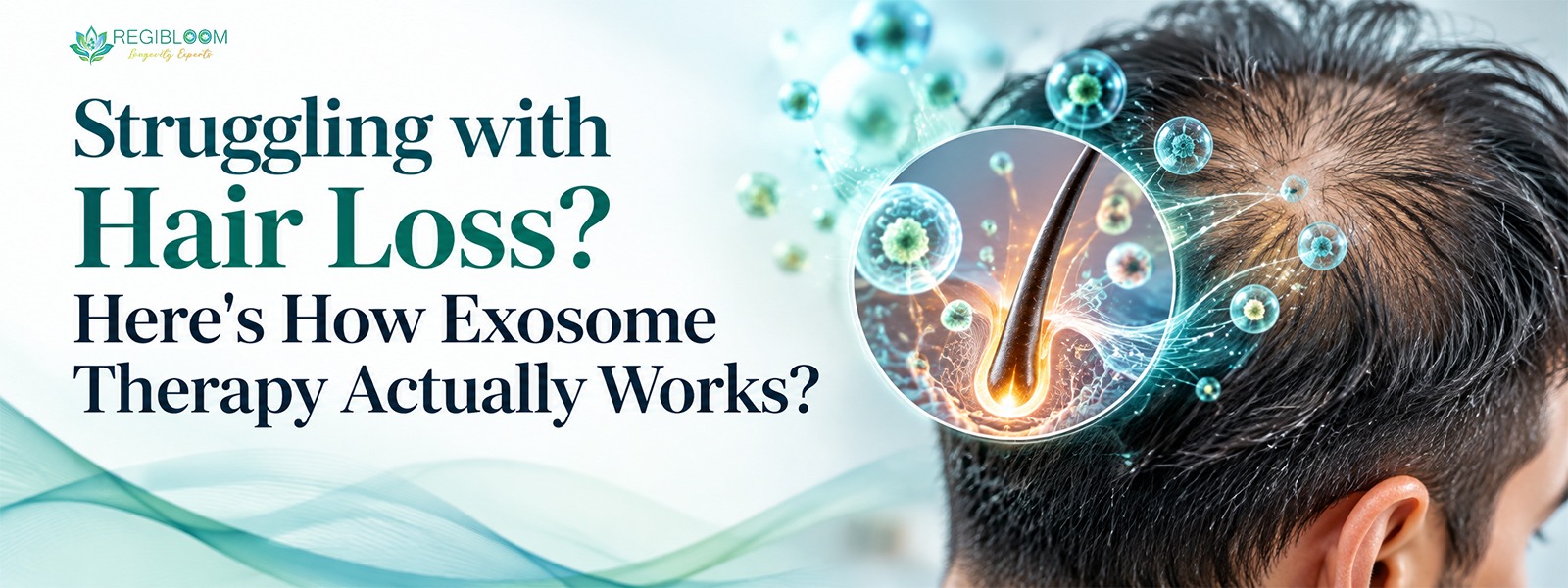
You notice it slowly, usually. A few more strands on the pillow than usual. The part looked a little wider in photos than it used to. Maybe you’ve already gone through the usual rounds — oils, biotin supplements, minoxidil bottles half-used and forgotten in a drawer. And somewhere along the way, you came across a name that wasn’t in the mix a few years ago: Exosome Therapy in India.
At Regibloom Wellness, this is probably the question we field the most right now. Not “does it work” exactly — more like, “how does it actually work, and is it worth it for me?” Fair questions. So let’s actually answer them, without the usual sales language that tends to creep into these articles.
In This Article
- Understanding Hair Loss: What’s Really Causing It
- Why Conventional Hair Loss Treatments Often Don’t Work Long-Term
- What Is Exosome Therapy for Hair Loss?
- How Exosome Therapy Works for Hair Regrowth: Step-by-Step Process
- Exosome Therapy vs PRP for Hair Loss: Which One’s Different, and How?
- Exosome Therapy Results for Hair Loss: What to Realistically Expect
- Is Exosome Therapy for Hair Loss Safe? Side Effects to Know
- Dr. B.S. Rajput on Hair Growth Factor Therapy: An Expert’s Perspective
- Who Is a Good Candidate for Exosome Therapy?
- Frequently Asked Questions
- Final Thoughts: Is Exosome Therapy Right for Your Hair Loss?
- About the Author
Understanding Hair Loss: What’s Really Causing It
Here’s the thing most people don’t realize until they’ve been dealing with hair loss for a while — it’s not one condition. It’s a symptom, and the cause behind it changes what actually helps.
A few of the more common culprits:
- Androgenic Alopecia (Pattern Baldness). Genetic and hormone-related; it affects men and women differently.
- Telogen Effluvium. Abrupt hair loss caused by illness, stress, or significant life events. It can be temporary but is very frightening when it occurs.
- Nutritional gaps, especially low iron, vitamin D, or protein intake.
- Scalp conditions like seborrheic dermatitis, which quietly damage follicles over time.
- Follicle miniaturisation — hair strands getting progressively finer with each growth cycle, until they barely grow at all.
Most shampoos and serums target one of these at best — usually just blood flow, or DHT. Which is exactly why so many people try everything and still feel stuck. You can’t fix a five-cause problem with a one-cause solution.
Why Conventional Hair Loss Treatments Often Don’t Work Long-Term
Minoxidil slows things down. It rarely reverses them. Finasteride helps with pattern loss specifically, but it comes with hormonal trade-offs that not everyone wants to sign up for. And transplants? Great for advanced baldness, not so useful if you’re catching thinning early — plus they don’t do anything to stop the surrounding hair from miniaturising further.
That gap — between managing symptoms and actually getting follicles to heal themselves — is where regenerative options like exosome therapy have started getting real attention from dermatologists, not just clinics chasing trends.
What Is Exosome Therapy for Hair Loss?
Exosomes are small vesicles released by stem cells — think of them less as “cells” and more as messengers. They don’t carry living cells themselves. What they do carry is a payload of growth factors, proteins, and RNA fragments that tell surrounding tissue how to repair and regenerate.
On the scalp, a highly concentrated exosome solution is injected right around the hair follicles. The concept is simple, although the science behind it isn’t: stimulate dormant or inactive hair follicles, increase local circulation, and reduce the inflammation that might otherwise be shrinking the follicles.
To be precise about it — exosome therapy for hair loss in India is still a physician-administered procedure. Not a spa treatment. Not a quick fix you do once and forget. It tends to work best for people with early-to-moderate thinning, where the follicle is struggling but not gone.
How Exosome Therapy Works for Hair Regrowth: Step-by-Step Process
It’s a fairly structured process, and skipping steps is usually where results fall short.
1. Scalp assessment first
Before anything is injected, a proper trichology consult happens — scalp analysis, sometimes dermatoscopy, and a look at your medical history. Thyroid issues, iron deficiency, autoimmune triggers — these can all mimic pattern hair loss, and treating the wrong cause wastes everyone’s time.
2. Preparing the solution
Unlike PRP, which comes from your own blood, exosome solutions used in hair growth factor therapy are usually lab-processed and standardised. That gives more predictable dosing session to session — you’re not relying on how “good” your blood draw happened to be that day.
3. The injections themselves
Fine needles, injected into the dermal layer around thinning areas. Thirty to forty-five minutes, usually with numbing cream beforehand. Uncomfortable, not painful — most people describe it that way.
4. What happens after
Over the following days, growth factors start activating dermal papilla cells — the actual engine of hair growth — and circulation in the area improves.
5. And then you do it again
Most protocols run several sessions, spaced four to six weeks apart. Hair growth is slow biology. There’s no version of this where one session changes everything.
Exosome Therapy vs PRP for Hair Loss: Which One’s Different, and How?
This comes up in almost every consultation. PRP uses your own blood — platelets get concentrated and injected, releasing growth factors as they break down. Exosome therapy skips the blood draw entirely and delivers a more concentrated, more targeted set of signalling molecules directly.
Some clinics combine both now, on the theory that they complement each other. Whether that makes sense for you really depends on your specific scalp condition — not something to decide from a blog post, honestly, but worth asking about at your consult.
Exosome Therapy Results for Hair Loss: What to Realistically Expect
Let’s be honest instead of impressive. This isn’t a switch that flips overnight. Most people start noticing less shedding and slightly better thickness around the 8–12 week mark. Real, visible density changes usually take three to four months, across multiple sessions.
What affects how well it works for you:
- How advanced the hair loss already is
- Whether it’s genetic or reactive (stress, illness, etc.)
- General scalp health and circulation
- Whether you actually stick to the follow-up schedule
- Sleep, stress levels, diet — yes, these matter more than people want them to
If you’re catching things early, you’ll likely see better results than someone with a long-standing bald patch, simply because there’s still living follicle tissue there to respond to the signal.
Is Exosome Therapy for Hair Loss Safe? Side Effects to Know
Because there are no living cells in the solution, immune rejection risk is low. You might get some redness or mild swelling at the injection sites for a day or two — similar to what you’d expect after micro-needling. Beyond that, serious complications are genuinely rare, provided the clinic is using properly sourced, quality-tested exosome products and the procedure is done by someone qualified. That last part matters more than people realize — the treatment name means less than who’s actually performing it.
Dr. B.S. Rajput on Hair Growth Factor Therapy: An Expert’s Perspective
We asked Dr. B.S. Rajput and the clinical team at Regibloom Wellness what they see go wrong most often. The answer, more or less every time: people wait too long. “Hair growth factor therapy works best when follicles are weakened, not gone” is something that comes up constantly in consultations. Getting the diagnosis right, starting early, and keeping expectations realistic — these end up mattering as much as the treatment technology itself.
Who Is a Good Candidate for Exosome Therapy?
This tends to make sense for people who:
- Are dealing with early-to-moderate thinning, not advanced baldness
- Have tried topical treatments without much success
- Want a non-surgical route before considering a transplant
- Are looking to support healing after a transplant procedure
- Would rather skip oral hormonal medications altogether
Where it usually doesn’t make sense on its own: long-standing bald patches with no active follicles left. In such instances, it could act as a supplementary therapy, enhancing scalp health either prior to or in addition to hair transplant surgery, but it will not be capable of restoring hair growth where there is none left to grow from.
Frequently Asked Questions
Is exosome therapy painful?
Mildly uncomfortable is the more accurate description. Numbing cream beforehand helps a lot.
How many sessions do I actually need?
Varies by case, but three to six sessions, spaced a few weeks apart, is the typical range.
Can it be combined with other treatments?
Yes — low-level laser therapy, topicals, and nutritional correction are commonly paired with it.
Does this work for women too?
Yes. It’s used for both male and female pattern hair loss, and for diffuse thinning as well.
Final Thoughts: Is Exosome Therapy Right for Your Hair Loss?
If you’ve tried the usual treatments and still feel stuck, that frustration is valid — hair loss isn’t just cosmetic, it affects how people feel walking into a room. Exosome therapy is a genuine step forward in regenerative hair science, but it isn’t magic, and it works best when it’s part of an actual diagnosed plan rather than something you try because it’s trending. At Regibloom Wellness Centre, the starting point is always figuring out what’s actually causing the loss — so that exosome therapy for hair loss gets used where it’s genuinely likely to help, not as a blanket answer for every kind of thinning.
If you’ve been dealing with hair loss and want an honest read on your options, a proper scalp evaluation is really where that conversation should start.
About the Author
Bhumi is a content writer with 2–3 years of experience creating SEO-driven, research-backed content across the health and wellness space. She specializes in simplifying complex medical and treatment-related topics into clear, reader-friendly articles that are optimized for search intent without compromising accuracy. Her writing focuses on helping readers make informed decisions through well-researched, engaging, and trustworthy content.


-
 Blog7 months ago
How Much Does It Cost to Rent a Porta Potty? (2026 Pricing Guide)
-
Lifestyle9 months ago
The Ultimate Guide to Choosing Contact Lenses for Beginners
-
Lifestyle8 months ago
Babydollkaila: The Alt-Fashion Icon Redefining Digital Style
-
News10 months ago
Hong Kong Fire: The Tragedy That Shook a City
-
News10 months ago
Is Debby Clarke Belichick Still Alive? 2025 Update & Truth
-
Blog7 months ago
Common Questions About Workplace Rights
-
Uncategorized8 months ago
Healthy Habits for Supporting Women’s Hair Wellness
-
News9 months ago
Melissa Sinkevics: The Woman Behind the Pageant Crown