Mudassir Ali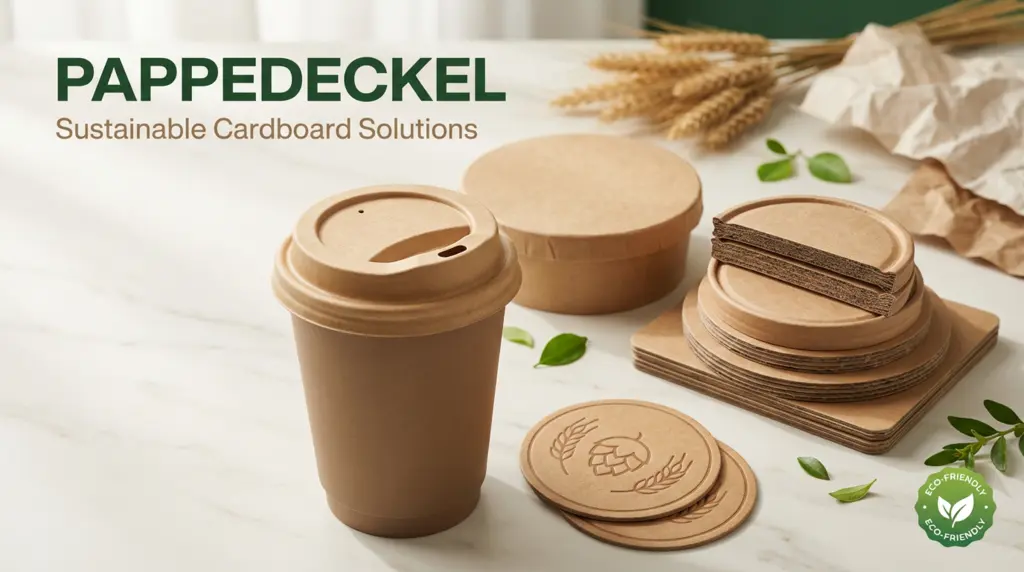
My local coffee shop switched to these brown cardboard lids last spring. At first, I thought they looked cheap—nothing like the sleek white plastic ones I was used to. Then I actually tried one. Not only did it work perfectly, but knowing it wouldn’t sit in a landfill for 450 years made my morning cappuccino taste somehow better.
That simple cardboard lid has a name: pappedeckel. And it’s quietly revolutionizing how American businesses think about disposable packaging. If you’ve noticed more cafes, restaurants, and food vendors switching away from plastic, you’re watching this German innovation take hold. Whether you’re a business owner considering the switch or a consumer wanting to understand what’s happening, understanding pappedeckel helps you navigate this eco-friendly shift.
What Pappedeckel Actually Means
Pappedeckel breaks down into two German words: “Pappe” (cardboard) and “Deckel” (lid or cover). Together, they describe thick cardboard covers designed for cups, containers, and food packaging.
Think beyond simple lids. Pappedeckel encompasses beer mats soaking up condensation in Munich pubs, takeout coffee toppers preventing spills during your commute, and sturdy covers protecting hot soup during delivery. The unifying factor? All use compressed paper fibers instead of petroleum-based plastics.
The material itself feels substantial—thicker than regular paper but lighter than wood. When manufactured properly, it resists moisture without plastic coatings, handles heat from fresh coffee, and maintains structural integrity during normal use. This balance makes pappedeckel practical, not just idealistic.
The Real Environmental Impact
Everyone claims their product helps the environment. Let’s look at actual numbers for pappedeckel versus plastic lids.
A standard plastic coffee lid weighs about 2.5 grams and takes 450 years to decompose. That same lid produces roughly 12 grams of CO2 during manufacturing. Multiply that by the 146 billion disposable cups Americans use annually, and you’re looking at significant environmental burden.
Pappedeckel lids typically weigh 3-4 grams but decompose in 2-6 months under proper conditions. Manufacturing produces about 40% less CO2 compared to plastic equivalents. More importantly, they’re made from recycled materials—most contain 60-100% post-consumer paper waste.
The catch? Pappedeckel doesn’t work for everything. Extended exposure to liquids eventually softens them. They’re perfect for coffee consumed within 30 minutes but problematic for all-day iced drinks. Understanding these limitations prevents disappointment and helps businesses choose appropriate applications.
Where You’ll Find Pappedeckel in Daily Life
Coffee shops lead pappedeckel adoption in the US, with chains like Blue Bottle and independent cafes making the switch. Walk into most specialty coffee spots in Portland, Seattle, or San Francisco, and you’ll likely receive your drink with a pappedeckel lid.
Food delivery containers increasingly use them too. That Chinese takeout covering your soup? Probably pappedeckel. The protective coaster under your craft beer at upscale bars? Definitely pappedeckel, often featuring brewery logos printed directly on the material.
Retailers now use them for product packaging—everything from cosmetics to gourmet foods. The material’s rigid structure protects contents while signaling environmental consciousness to consumers. Some companies even incorporate pappedeckel into premium packaging strategies, treating it as upscale rather than downmarket.
Making the Business Case: Costs and Benefits
Business owners considering pappedeckel always ask about cost. Currently, cardboard lids cost 2-5 cents more per unit than plastic equivalents. For a café serving 200 coffees daily, that’s $4-10 extra per day or roughly $1,500-3,600 annually.
But simple cost comparison misses broader considerations. Many states now ban or tax plastic lids—California charges 5-10 cents per plastic lid in some municipalities. Those fees can exceed pappedeckel costs entirely.
Customer perception matters too. When my friend’s café in Boulder switched to pappedeckel, she worried about the added expense. Within two months, regular customers started specifically mentioning the eco-friendly lids in online reviews. New customers cited sustainability as why they chose her shop over competitors. Revenue increased 12% that quarter.
The practical trade-off? You’ll need different storage since pappedeckel takes more space than compressed plastic stacks. Staff training helps too—paper lids require slightly different application technique than plastic snap-ons.
The Manufacturing Process Explained
Understanding how pappedeckel gets made helps appreciate its environmental benefits. Manufacturing starts with recycled paper collection—old newspapers, cardboard boxes, office paper. After sorting by grade, the material gets pulped in large vats with water and mild chemicals that break down fibers.
This pulp undergoes multiple screening stages removing staples, plastics, and other contaminants. Clean pulp then moves to forming machines that compress it into thick sheets under high pressure and heat. Some manufacturers add natural wax coatings during this stage, providing moisture resistance without plastic.
The key innovation? Modern pappedeckel uses bio-based coatings derived from plant materials rather than petroleum. These allow liquid resistance while maintaining compostability. Not all pappedeckel includes these coatings—some rely purely on compressed fiber density for protection.
Finished sheets get die-cut into specific shapes, whether coffee lids, coasters, or food container covers. Quality control ensures consistent thickness and moisture resistance before packaging for distribution.
Common Misconceptions About Pappedeckel
Myth: They get soggy immediately. Quality pappedeckel resists liquid for 30-60 minutes easily. Problems occur when people confuse regular cardboard with purpose-built pappedeckel designed specifically for food service.
Myth: They’re always more expensive. While often pricier than bulk plastic, pappedeckel can cost less than “compostable” plastic alternatives. When factoring in potential plastic taxes or bans, economics sometimes favor paper.
Myth: All pappedeckel is compostable. Some use synthetic coatings that prevent proper decomposition. Look for certifications like BPI (Biodegradable Products Institute) or specific compostability claims to ensure actual environmental benefits.
Myth: They don’t seal properly. Modern pappedeckel lids use clever design—raised edges, friction fits, and structural engineering—that creates secure seals without plastic flexibility. Different mechanism, same result.
Tips for Businesses Considering the Switch
Start with a trial period rather than complete conversion. Order enough pappedeckel for two weeks, gather staff and customer feedback, then adjust. Many suppliers offer sample packs specifically for testing.
Train your team on proper application. Paper lids seat differently than plastic—they need firm, even pressure rather than a snap. Thirty seconds of training prevents most issues.
Communicate the change to customers beforehand. Simple signage explaining the switch and its environmental benefits turns potential complaints into positive reinforcement. My local café posted: “Paper lids = 450 fewer years in landfills per cup.”
Consider hybrid approaches initially. Use pappedeckel for hot drinks where they excel, keep alternative options for cold drinks requiring longer-term liquid resistance. Not every solution fits every application.
Quick Implementation Checklist
Order samples from 2-3 suppliers to compare quality and pricing. Test with actual hot liquids to verify moisture resistance. Calculate your break-even point including any plastic taxes or fees. Prepare staff training focused on application technique. Draft customer communication explaining the environmental benefits.
Finding Quality Pappedeckel Suppliers
US businesses have several reliable pappedeckel sources. EcoProducts, World Centric, and Vegware all offer certified compostable options. Prices range from $45-75 per 1,000 units depending on size and coating specifications.
For smaller operations, restaurant supply stores like WebstaurantStore or ULINE carry pappedeckel in smaller quantities. Expect higher per-unit costs but lower minimum orders—ideal for testing or low-volume needs.
European suppliers often offer superior quality given pappedeckel’s German heritage. Companies like Huhtamaki and DS Smith manufacture specifically for food service, with dedicated product lines meeting FDA requirements for US food contact.
Before purchasing, verify certifications. Look for FDA food-contact approval, compostability certifications, and ideally some percentage of recycled content. Legitimate suppliers readily provide this documentation.
Common Questions Answered
How long do pappedeckel lids stay effective on hot drinks?
Quality pappedeckel maintains integrity for 30-60 minutes with hot beverages. After that, moisture absorption gradually weakens structural strength. This timeframe works perfectly for typical coffee consumption but not for all-day sipping.
Can pappedeckel go in regular recycling bins?
Yes, most pappedeckel qualifies as standard cardboard recycling. However, those with wax or bio-coatings sometimes require commercial composting facilities rather than home bins. Check local recycling guidelines or look for specific disposal instructions from your supplier.
Does pappedeckel affect drink taste?
High-quality pappedeckel has no discernible taste impact. Inferior products or those with heavy wax coatings occasionally impart slight cardboard flavor, but this is rare with food-grade materials from reputable suppliers.
What’s the shelf life for unused pappedeckel?
Stored properly in dry conditions away from direct sunlight, pappedeckel lasts 12-18 months. Moisture exposure degrades it even before use, so proper storage matters more than with plastic alternatives.
Are there size limitations with pappedeckel?
Standard coffee cup sizes (8-20 oz) work perfectly. Very large containers (over 32 oz) or unusually shaped vessels may need custom solutions. Most suppliers offer various sizes matching standard cup dimensions.
You May Like:
The Cultural Shift Behind Pappedeckel
Pappedeckel represents something larger than product substitution—it reflects changing consumer values. Research from the National Restaurant Association shows 70% of Americans consider environmental impact when choosing dining establishments. Younger consumers especially prioritize sustainability, with 45% of millennials willing to pay more for eco-friendly options.
This shift creates competitive advantage for early adopters. When major chains announce plastic reduction goals, smaller businesses gain differentiation by already using pappedeckel. Being ahead of trends builds brand loyalty and attracts conscious consumers.
The change isn’t always smooth. Some customers resist anything different, viewing paper lids as inferior or annoying. Successful businesses frame the transition as premium and progressive rather than compromise. It’s not “making do without plastic”—it’s “choosing better alternatives.”
Looking Forward
Pappedeckel technology continues improving. Researchers develop stronger bio-coatings, extending functional time without compromising compostability. Some companies experiment with recycled agricultural waste, creating lids from sugarcane bagasse or wheat straw instead of paper.
Regulatory environment pushes adoption too. California, New York, and Washington ban various single-use plastics. European Union rules inspire American legislation. As regulations tighten, pappedeckel transitions from optional to necessary.
Cost trajectories favor paper. Plastic prices fluctuate with oil markets and face increasing environmental taxes. Pappedeckel production scales up annually, driving per-unit costs down. Within 3-5 years, price parity seems likely for many applications.
Your next takeout coffee probably comes with pappedeckel whether you notice or not. Understanding this simple innovation helps you appreciate the material science, environmental benefits, and business considerations behind that brown cardboard lid. Small changes multiply—and pappedeckel proves sustainable alternatives can work just as well as what they replace.



 Rizwan Ali