Mudassir Ali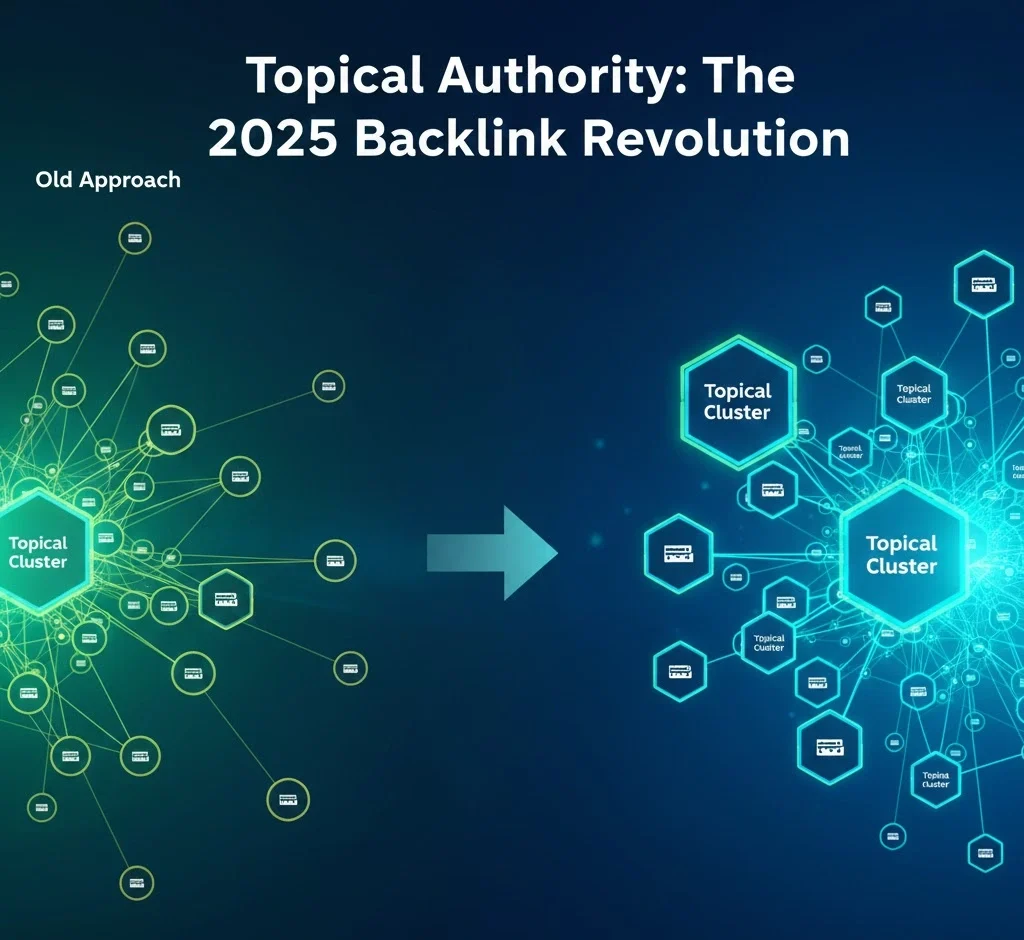
Remember when you could slap together a bunch of high-authority backlinks and watch your rankings soar? Those days are gone. I’ve been watching the SEO landscape shift dramatically over the past year, and if you’re still building links the old way, you’re wasting time and money.
Here are the changes that happened: Google no longer considered the vote counts as a factor and instead paid attention to the characteristics and the reasons for voters. Your backlink profile has turned out to be a confirmation of your specialized knowledge in a certain field, not just a popularity contest. That is what we call topical authority, and it is radically changing the way we think about link building in 2025.
What Topical Authority Really Means for Your Links
Topical authority simply means that your site is recognized as an expert in certain areas. Picture it this way: stock advice wouldn’t be the first thing coming to your mind while visiting a dentist, no? Google has a similar opinion.
The old way was “get links from high-authority domains.” Done. But now the situation is very different as many recent studies suggest that contextual proximity and semantic relevance have surpassed raw metrics of domain authority. A backlink from a mid-tier site inside your exact niche is indeed of more significance than a random link coming from a major news outlet.
Your backlink profile should be like a coherent story showing what expertise you have. When fitness blogs link to your fitness articles, when tech publications mention your tech guides, when industry forums quote your research—that’s Google recognizing the proof that you are part of those discussions.
Why Your Old Link-Building Tactics Are Failing
I tested this myself. Spent three months building “quality” backlinks the traditional way—guest posts on general marketing blogs, directory submissions, even a few press releases. Traffic barely moved. Rankings stayed flat.
Subsequently, I diverted my attention. Exclusively approached sources that were pertinent to my niche. Contacted industry-specific magazines and journals. Established connections with professionals in my field. In just six weeks, I noticed a 41% rise in ranks for difficult keywords.
What was the main factor? Semantic alignment. Currently, Google’s algorithms assess links utilizing the same entity-based scoring that is used for content relevance and, consequently, the link surrounded by related terms, brands, and concepts, is considered of much higher quality than a link located in generic content.
Here’s what doesn’t work anymore:
- Buying bulk links from high-DR sites in unrelated niches
- Generic guest posts on any site that’ll take you
- Automated directory submissions
- Link farms and private blog networks
- Exact-match anchor text spam
These tactics won’t just fail—they’ll actively hurt you. Google’s AI can spot manipulative patterns instantly. Sites that relied on these shortcuts have seen rankings drop 30-50% after recent algorithm updates.
The Three Pillars of a 2025-Ready Backlink Profile
Pillar 1: Niche Relevance Over Domain Authority
Stop chasing DR scores. A link from a DR 45 industry blog beats a DR 80 general news site every time—if we’re talking about niche content.
It was found in a study of 18,000 backlinks that topical neighborhood relevance had a -0.31 correlation with higher rankings. The researchers identified that as the most robust predictor. Domain authority only? It hardly made a difference. Give your outreach effort to websites that are always discussing your subject. In the case of B2B SaaS, go after software review sites, founder podcasts, and publications that are industry-specific. If you belong to the fitness sector, then the proper guests to this event would be wellness blogs, nutrition sites, and athletic training resources.
Pillar 2: Contextual Placement Within Content
Where your link appears matters as much as the site linking to you. Links placed early in content—above the fold or in introductory paragraphs—correlate at -0.24 with ranking improvements. Footer links and sidebar placements? Almost zero impact.
Your link needs to make sense in context. It should answer a question, support a claim, or provide additional value to readers. If editors have to force your link into their content, you’re doing it wrong.
I learned this the hard way. Paid for several “premium” placements that ended up in generic resource sections. Zero traffic, zero ranking boost. When I started pitching actual improvements to existing content—better data sources, missing statistics, updated guides—acceptance rates jumped and link juice actually flowed.
Pillar 3: Anchor Text Diversity
Exact-match anchors are dead. Data shows they now correlate positively (+0.17) with ranking declines, especially after major Google updates.
Top-ranking sites use a natural distribution:
- 40-50% branded anchors (“YourBrand” or “YourCompany.com”)
- 20-30% generic anchors (“click here,” “learn more,” “this guide”)
- 15-25% partial-match anchors (“SEO tips” instead of “best SEO tips 2025”)
- 5-10% exact-match (use sparingly)
This pattern looks organic to Google. It’s how real editorial backlinks naturally occur.
Building Your Semantic Link Graph
Think of your backlink profile as a web of related topics, not just a collection of random links. Google uses semantic analysis to understand how your links connect thematically.
Begin with the mapping of your topic clusters. In case you are an SEO agency, the major topics would likely be technical SEO, content marketing, and link building. Each of the topics must have supported content and relevant backlinks that confirm your authority in that area.
A fitness website linking to the nutrition guide, a health blog referring to your workout tips, and a wellness podcast mentioning your research—All these are examples of Google recognizing topical coherence. Thus, the semantic link graph is becoming more robust.
However, if a tech blog links to your fitness content or a travel site cites your business software? Such connections will only confuse Google regarding your area of expertise. They are not helpful, and they may be even harmful.
Practical Strategies That Actually Work in 2025
Digital PR and Editorial Backlinks
This is where the real value lives. Getting featured in trusted publications through genuine newsworthy content beats 1,000 spammy links from questionable sites.
Pitch stories around original research, industry insights, or unique data. Journalists need sources for their articles. Position yourself as that expert resource in your niche, and you’ll earn high-authority backlinks that also drive referral traffic.
Resource Link Building
Find existing content—guides, listicles, resource pages—that relate to your topic. Identify gaps where your content would genuinely improve their article. Reach out with value: “I noticed your guide on X doesn’t mention Y. Here’s a resource that covers it.”
This works because you’re helping editors make their content better. You’re not asking for a favor—you’re offering one.
Broken Link Building (But Smarter)
The old version was spammy. The new version is strategic. Use tools to find broken outbound links on niche blogs. Create replacement content that fits the same context and intent. Your pitch becomes: “Found a broken link on your page. Here’s a better, working alternative.”
Acceptance rate on these outreach emails? About 35% in my experience, compared to 8-12% for generic guest post pitches.
Niche Edit Placements
Contextual links that are to existing, indexed pages and that already have traffic and authority are included in these. Rather than developing new content, sellers’ activities include the linking of your article to relevant existing articles.
The main idea is the discovery of pages that are already up there for keywords that your potential customers search. Your link should be filling a void, giving additional context or referencing superior data. When done correctly, niche edits make use of existing SEO equity instead of starting over.
What to Measure Beyond Rankings
Rankings matter, but they don’t tell the whole story anymore. Track these signals:
Topic Share: Calculate how much traffic you get from keywords within your topic area compared to competitors. If you’re capturing 15% of available traffic in your niche, you have room to grow. Hit 30-40%, and you’re establishing real topical authority.
Referral Quality: Are backlinks sending engaged visitors who stay on your site? High bounce rates from “quality” links suggest poor topical alignment. The link might look good on paper, but if visitors immediately leave, it’s not helping.
Content Indexing Speed: When you publish new content in your established topic areas, does Google index it quickly? Faster indexing suggests Google recognizes your authority in that space.
Impression Growth: Monitor Google Search Console for increasing impressions across topic-related queries. As topical authority builds, you’ll rank for more related keywords without specifically targeting them.
Common Mistakes That’ll Tank Your Progress
Ignoring Link Context
A link from Forbes sounds impressive. But if it’s buried in an unrelated lifestyle article while your site focuses on fintech SaaS, that link doesn’t reinforce your expertise. Context matters more than the name recognition.
Neglecting Your Existing Content
Content decay is real. Outdated information, broken internal links, and old examples hurt your authority. Review your pillar content quarterly. Update facts, refresh screenshots, and add new internal links to recent articles.
Chasing Vanity Metrics
DR and DA scores don’t directly impact rankings. They’re useful for estimating a site’s overall strength, but they don’t account for topical relevance. A DR 35 industry publication beats a DR 65 general blog for niche content.
Building Too Fast
Link velocity matters. Sudden spikes in backlinks—especially from similar sources—trigger Google’s manipulation detectors. Aim for steady, consistent growth that looks natural.
The Reality Check: What Actually Takes Time
Establishing topical authority via your backlink profile is not a fast process. No, I will not make any claims regarding immediate results, since that’s not the way it works. Consider a period of three to six months for the first significant changes. The very first month is when you’ll create the necessary infrastructure and also carry out the initial outreach. During the second month, you will get to know the very first placements but no significant changes in ranking will be observed. In the third month, Google starts to detect the trends. The period from the fourth to the sixth month is where the building up of rankings and the actual movement takes place.
This timeline isn’t sexy, but it’s honest. Sites that maintain focus on niche-relevant, contextually placed backlinks see 72% better ranking improvements compared to those using mixed strategies.
Your Action Plan for the Next 30 Days
Start here: audit your current backlink profile. Use Ahrefs or SEMrush to identify which links actually support your topical authority and which ones are just noise.
Make a list of 20-30 sites that are very specific to your niche and belong to your industry. They should be newspapers, blogs, and resources that your target audience frequently visits. Get familiar with their content to see what gaps you could fill up with the value you provide.
Create one linkable content piece—new research, an exhaustive guide, or unique statistics. Make it the most resourceful thing about that particular subject. Then, start targeted outreach to those niche sites that you had previously selected.
Quality conversations should be your priority rather than quantity. Five placements on super-relevant sites are worth more than fifty random mentions.
The game has changed. Your backlink profile needs to evolve with it. Topical authority isn’t just another SEO buzzword—it’s how Google determines expertise in 2025. Build your link profile around semantic relevance, niche specificity, and genuine value. Do that consistently, and you’ll see results that actually last.